
The way people search online is changing fast. Traditional SEO used to focus heavily on informational keywords like “what is acupuncture” or “benefits of cupping therapy.” While these still bring traffic, they don’t always convert into real customers.
Today, with the rise of AI search tools like ChatGPT and Perplexity, the focus is shifting toward intent-driven and commercial keywords and we’ve seen this transformation firsthand.
This is a real case study of how we helped an acupuncture and Chinese medicine clinic in San Francisco move from low-converting informational traffic to high-value commercial visibility.
The Problem: High Traffic, Low Conversions
When we started working on this client’s website, it already had decent traffic. However, most of it was coming from informational queries.
Our keyword audit told the real story. Out of the site’s full keyword portfolio:
|
Intent |
Keywords |
% of Total |
Traffic |
|
Informational |
203 |
59.7% |
246 |
|
Navigational |
37 |
10.9% |
136 |
|
Commercial |
75 |
22.1% |
494 |
|
Transactional |
25 |
7.4% |
1,400 |
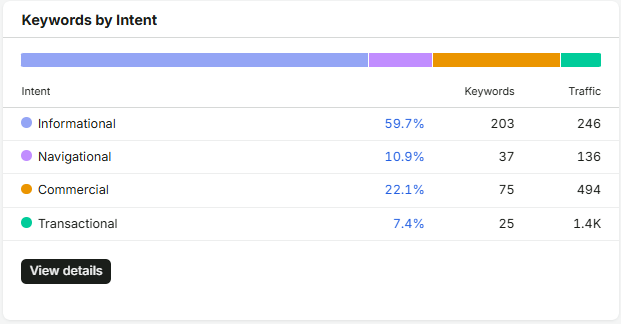
Nearly 60% of the site’s ranked keywords were purely informational things like:
- “What is acupuncture?”
- “Benefits of Chinese medicine”
- “Does cupping therapy work?”
But here’s the part that mattered most: the 7.4% of keywords classified as transactional were pulling in 1,400 visits far outweighing what the much larger informational bucket delivered. In other words, the site had volume in the wrong place and was leaving its highest-intent traffic underdeveloped. Lots of visitors, but:
- Low inquiries
- Minimal bookings
- Weak local visibility
The website had traffic, but not business growth.
The Shift: Targeting AI Search Visibility First
Instead of directly pushing commercial keywords, we took a different approach.
We focused on ranking the brand inside AI search engines like ChatGPT and Perplexity.
Strategy Used:
1. Topical Authority Building
We created content clusters around:
- Acupuncture treatments
- Pain management
- Holistic healing
This helped position the website as a trusted source in its niche.
2. Brand Mentions on Reddit & Quora
We didn’t spam links. Instead, we used:
- Real user experiences
- Honest feedback
- Natural conversations
Example approach:
- Answering real questions about acupuncture
- Sharing genuine experiences
- Mentioning the brand naturally
This built trust signals, not just backlinks.
3. Leveraging Real Reviews
One key factor that worked extremely well was: Authentic patient feedback
Instead of promotional content, we highlighted:
- Real experiences
- Before-after improvements
- Honest opinions
AI tools prefer trustworthy, human-like content, and this played a big role in brand recognition.
The Breakthrough: AI Search Visibility
Within a few months, the brand started appearing in AI-generated answers, recommendation-based queries, and health-related discussions.
This is important because AI tools don’t just rank websites they recommend brands.
The clearest proof came directly from ChatGPT itself. When we asked it to recommend acupuncture clinics in San Francisco, the clinic showed up #3 on the list, with a 5.0/5 rating from 164 reviews, described specifically as “well regarded for personalized treatment plans, pain relief, fertility care, digestive issues, and overall wellness.”
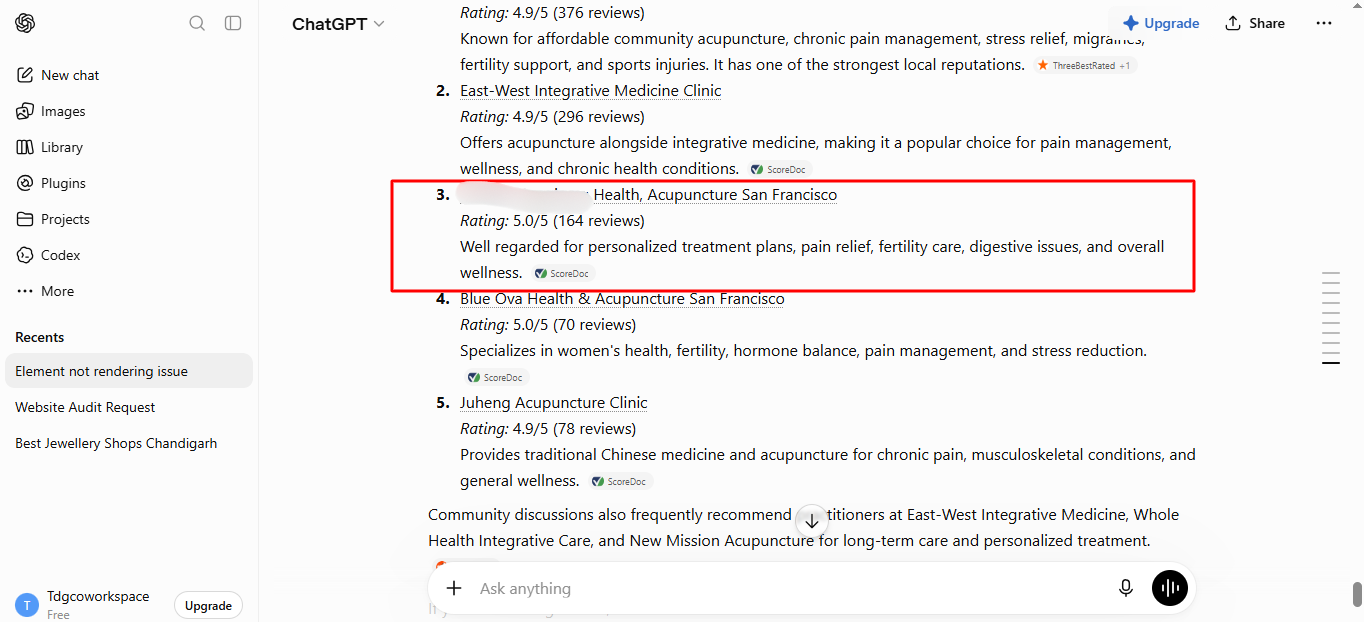
That’s not a search engine listing you can buy your way into that’s an AI model independently surfacing the brand alongside its top local competitors, based on accumulated trust signals, reviews, and content authority.
Once the brand became visible in AI search: User trust increased Branded searches started growing
The Next Step: Turning Traffic into Customers
After building AI visibility, we shifted focus toward commercial intent.
What We Did:
1. Added Local Business Relevance
We optimized content for:
- Location-based keywords
- Service-specific pages
- Local intent queries
Example:
- “Acupuncture clinic near me”
- “Pain relief therapy in San Francisco”
2. Ran Targeted Ads for Awareness
We used paid campaigns to:
- Increase local visibility
- Build brand recall
- Support organic growth
This created a strong connection between: AI discovery + Local presence
The Result: From Informational to Commercial Growth
The impact was clear:
Before:
- High informational traffic (59.7% of keywords, but comparatively low traffic value)
- Low conversions
- No visibility inside AI search tools
After:
- Increased branded searches
- Better local visibility
- A confirmed #3 ranking with a 5.0/5 rating inside ChatGPT’s own recommendations
- Growth in commercial keyword rankings
- More inquiries and bookings
The website didn’t just get traffic it started attracting people ready to take action.
What This Means for SEO in 2026
This case clearly shows one thing:
SEO is no longer just about keywords It’s about intent, trust, and visibility across platforms
According to industry insights from major SEO studies:
- A large portion of searches are becoming zero-click
- Users prefer direct answers over multiple links
- AI tools prioritize authority and real-world trust signals
Key Takeaways
- Informational keywords alone are not enough even when they make up the majority of your keyword portfolio
- AI visibility is the new competitive edge
- Brand mentions build trust faster than backlinks
- Real reviews outperform promotional content
- Commercial intent grows when trust is established first
Final Thoughts
The future of SEO is not just ranking on Google it’s about being recommended by AI.
If your brand is visible in conversations, discussions, and trusted sources, commercial growth will follow naturally.
And that’s exactly what happened in this case from a 59.7% informational keyword base to a #3, 5.0-star placement inside ChatGPT’s own recommendations.

Anshul Rana
I’m an SEO, AEO, and GEO specialist who has spent 8+ years getting businesses found online. Whether it’s Google, ChatGPT, Gemini, or Perplexity, I make sure your brand shows up where your customers are searching.
Recent Comments